Tock
At Tock, I led design initiatives through critical business transformation, guiding cross-functional teams to develop zero-to-one revenue-driving products. I turned difficult industry problems into simple solutions that were as delightful to use as they were delicious, driving significant growth and positioning the company for acquisition by Squarespace.
To go & table-side dining
When the restaurant industry faced unprecedented disruption, I led cross-functional teams in a strategic pivot that transformed our platform capabilities. This initiative required rapid decision-making, architectural thinking, and stakeholder alignment to deliver solutions that enabled customer survival and business growth during a critical period.
Strategy
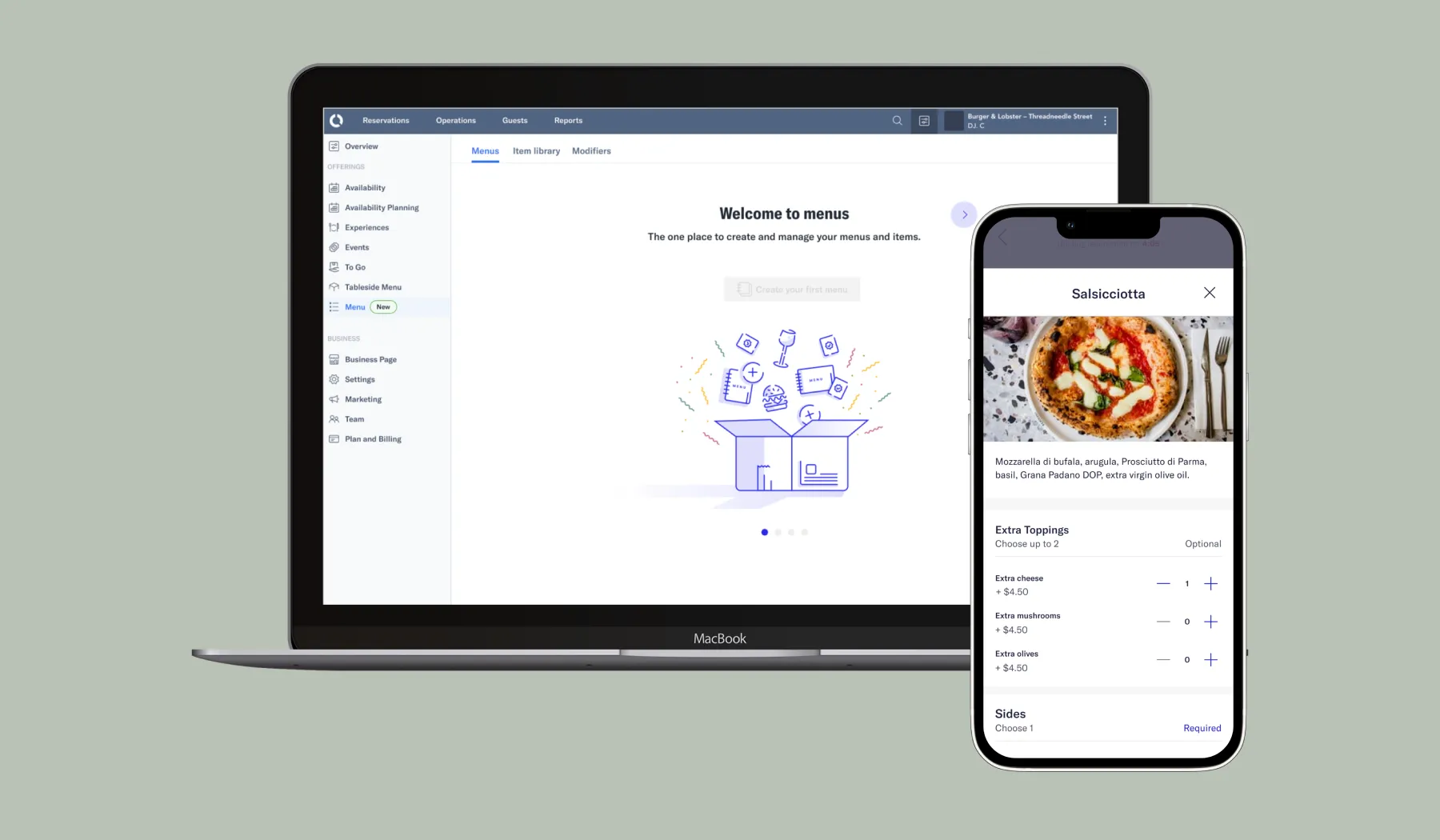
I had to solve two problems simultaneously: help restaurants manage their operations while creating consumer ordering experiences. Working across both sides of the platform, I designed restaurant-facing menu management tools alongside streamlined consumer ordering interfaces that prioritized products over our traditional time-slot approach, fundamentally shifting how both operators and guests interacted with our platform.
Scale
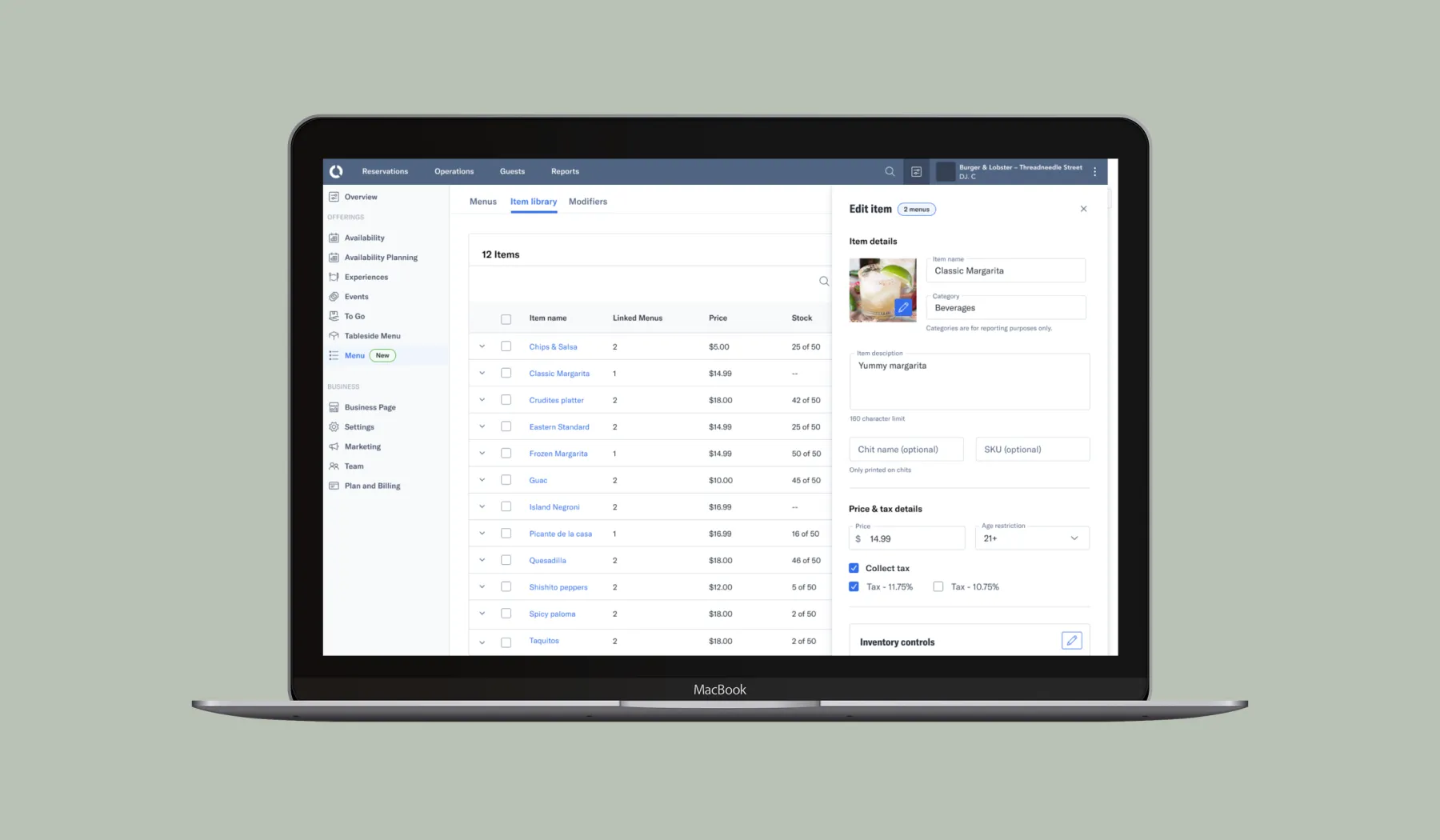
The breakthrough was redesigning our data model to support flexible menu relationships through a global item library. Restaurants could create items once and deploy them across takeout, delivery, and tableside with different pricing and availability. This architectural decision enabled operational efficiency while maintaining the flexibility restaurants needed to adapt quickly.
Search and Conversion
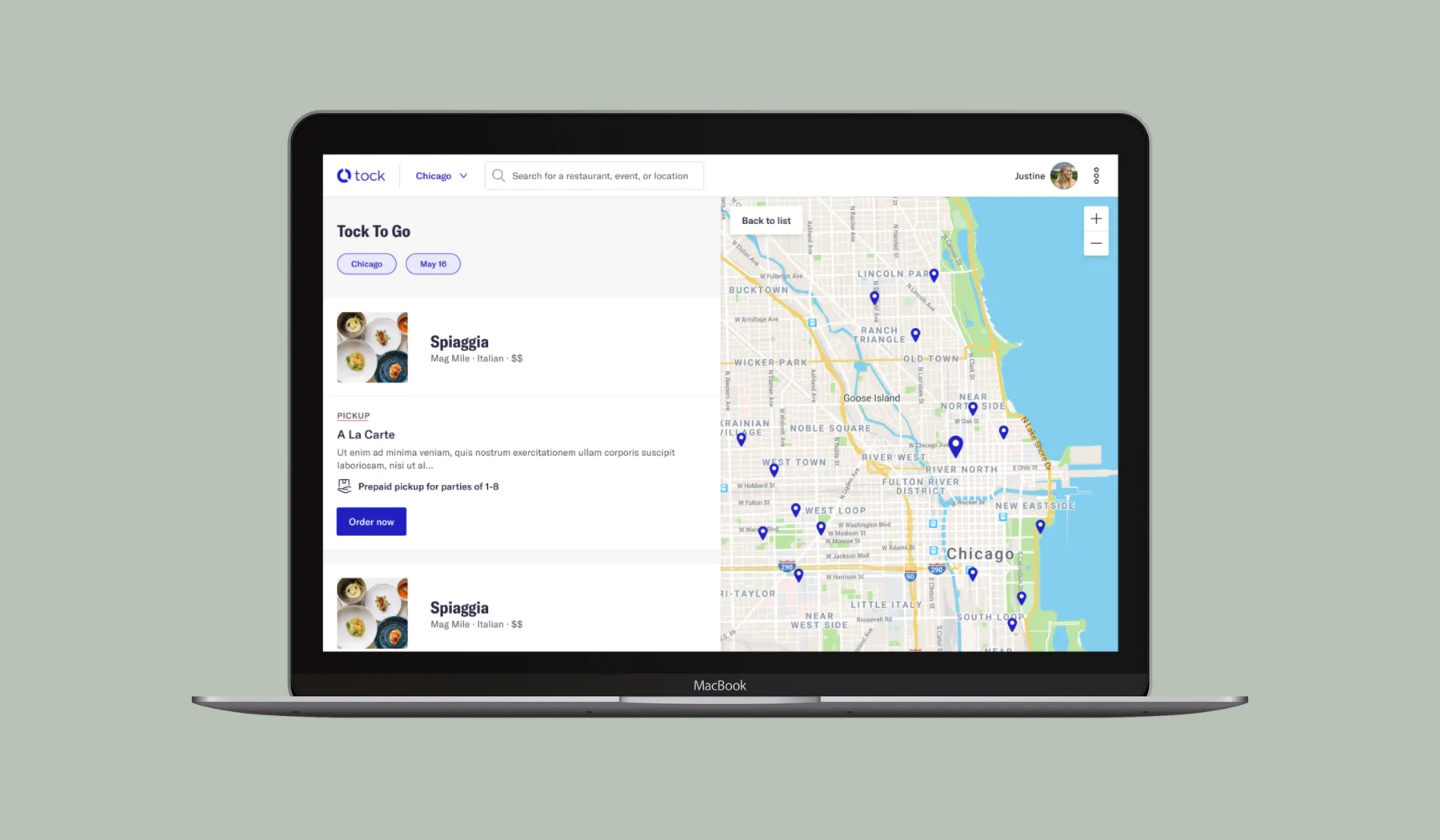
Through funnel analytics, we identified that guests couldn’t discover takeout options in our reservation-focused interface. We redesigned the discovery flow to surface ordering experiences prominently in search results, creating new entry points that helped customers find and access restaurant offerings in ways that matched their changing behaviors and expectations.
Impact
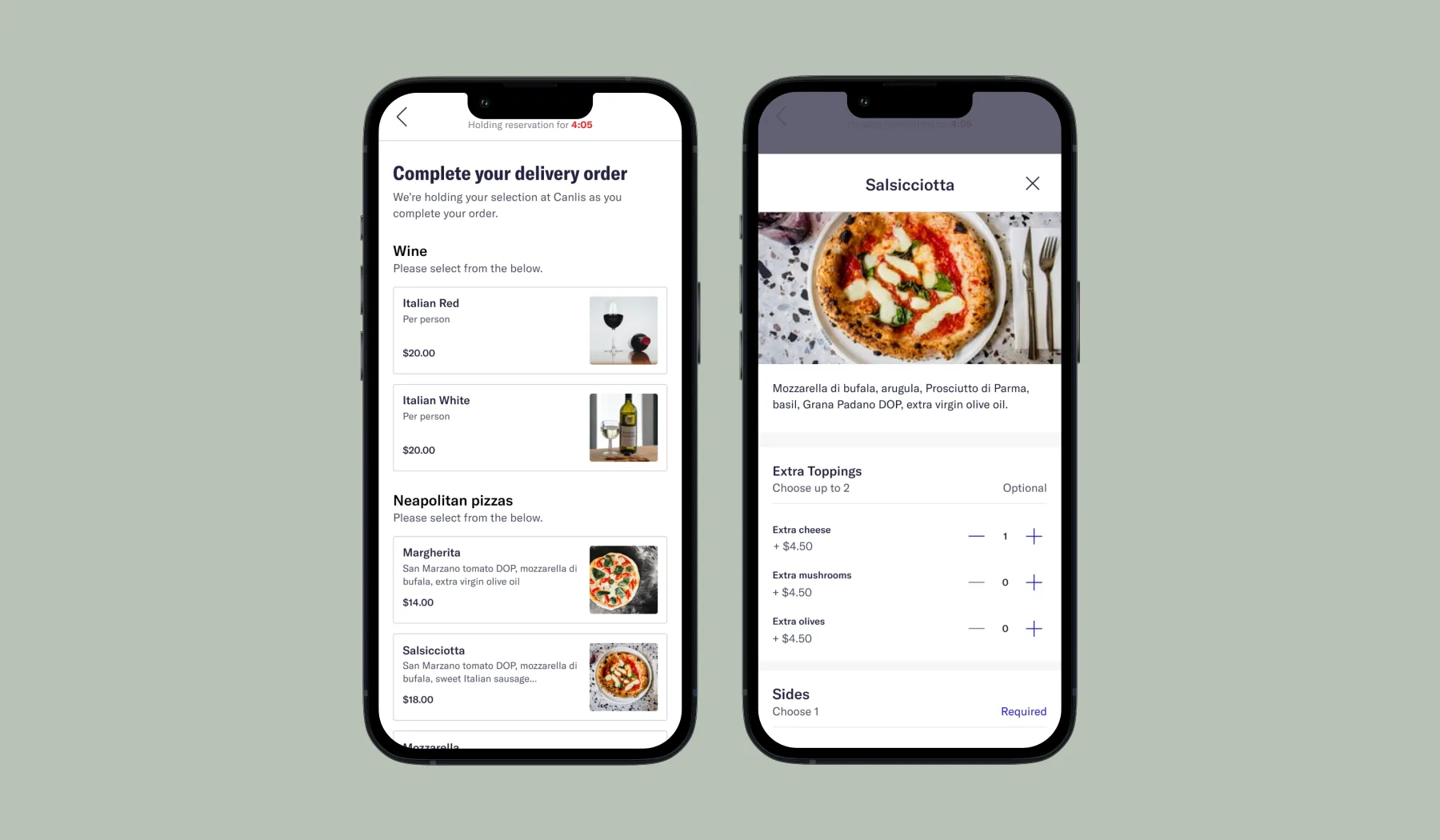
I created streamlined ordering interfaces that put restaurant products front and center, moving away from our complex reservation flows toward simple, conversion-focused experiences. The systematic approach to menu presentation and checkout optimization drove measurable improvements in conversion rates while helping restaurants generate new revenue streams.
Wine Shop
Recognizing market opportunity during industry challenges, I led the strategic development of a two-sided marketplace that required balancing complex regulatory constraints, operational requirements, and user experience goals. This initiative demanded sophisticated product strategy and cross-functional coordination across multiple stakeholder groups.
Brief
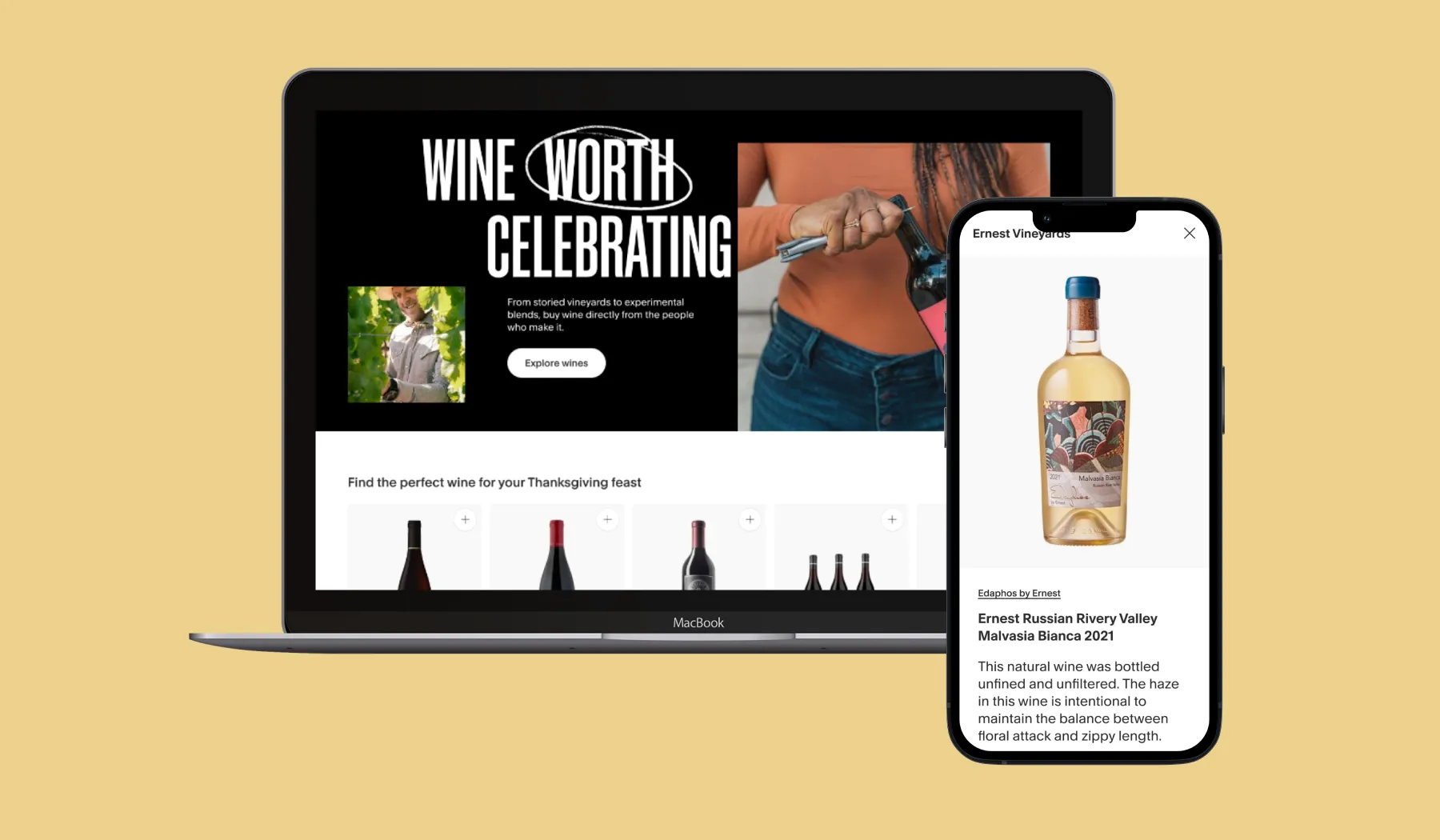
An opportunity to boost our GMV and drive sales for our customers while also providing a new product offering for our guests. This was accomplished through the creation of a two-sided marketplace that not only opens up a new revenue stream for our existing winery customers but also empowers guests to effortlessly explore and purchase their favorite wines directly from the brands they love.
Discovery and Implementation
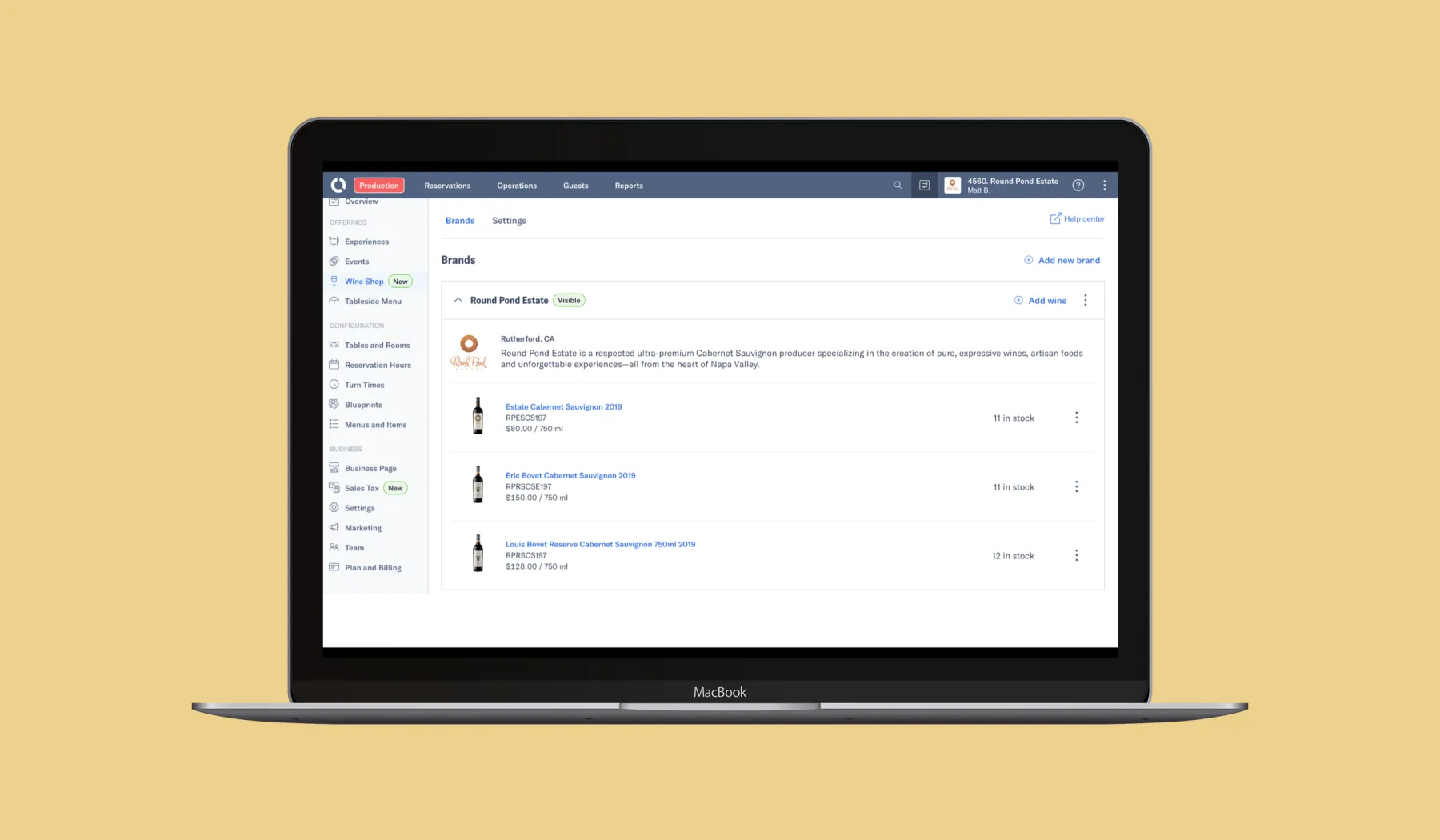
Through strategic partnerships with our winery customers, we developed a streamlined approach for managing inventory, fulfillment, and orders that integrates seamlessly with their current tools. By leveraging our existing menus and inventory features, we were able to rapidly iterate and maximize the reuse of our infrastructure and components.
Impact
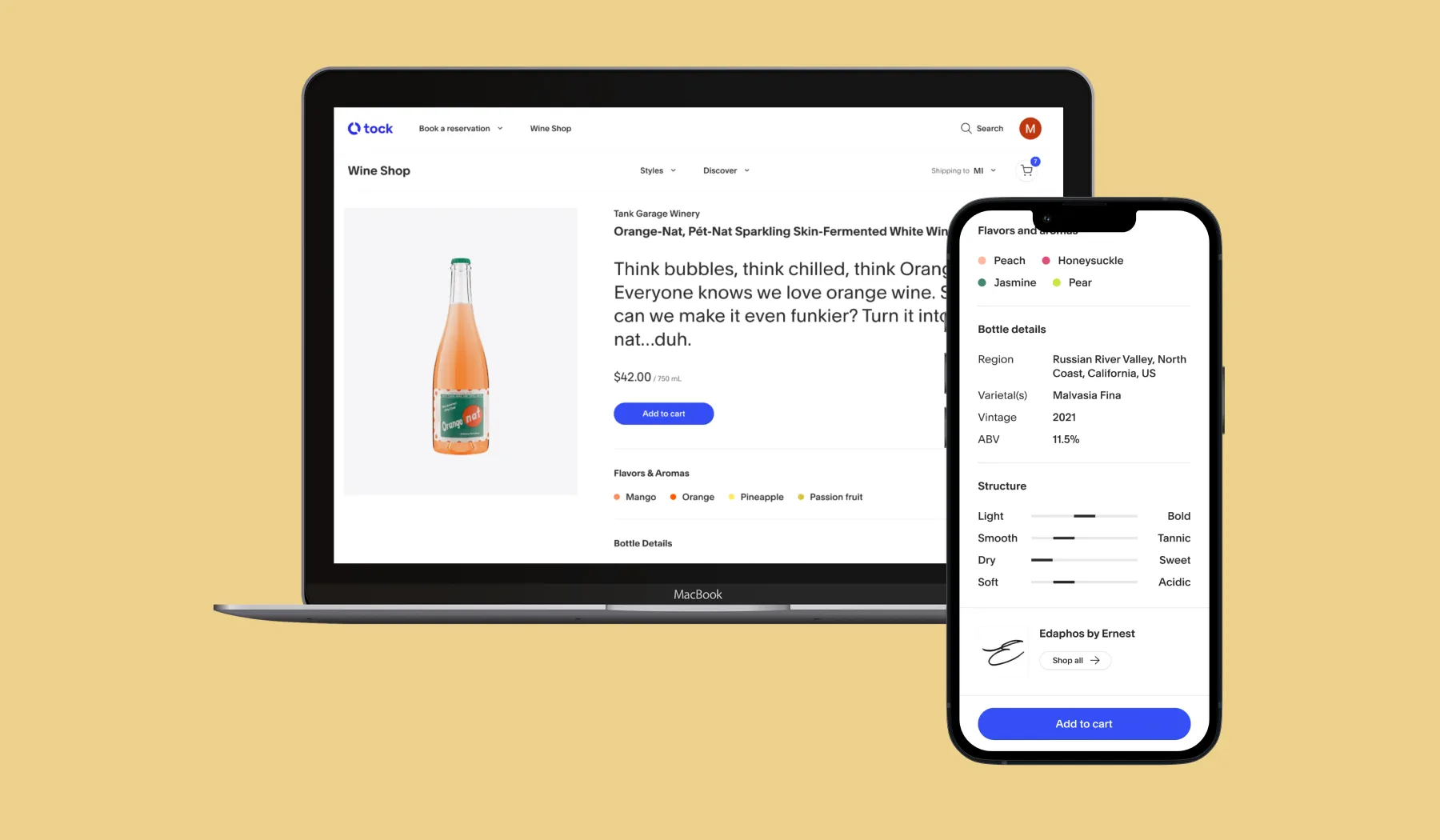
Cross-selling between experiences and the wine shop resulted in a stickier product that increased GMV, increased conversion rates for our winery customers, and decreased churn for our customers. Our guest activation rates were also increased, as more visitors became engaged with our offerings and made purchases directly from brands they either already knew and loved, or discovered between experiences and the shop.
Availability Planning
Over time, the unique and distinguishing characteristics of Tock that initially attracted customers to the platform became overly complicated and disconnected. To address this issue, our objective was to integrate various components of the back-of-house operations tools and restructure them into specific tasks, aimed at facilitating common workflows.
Discovery
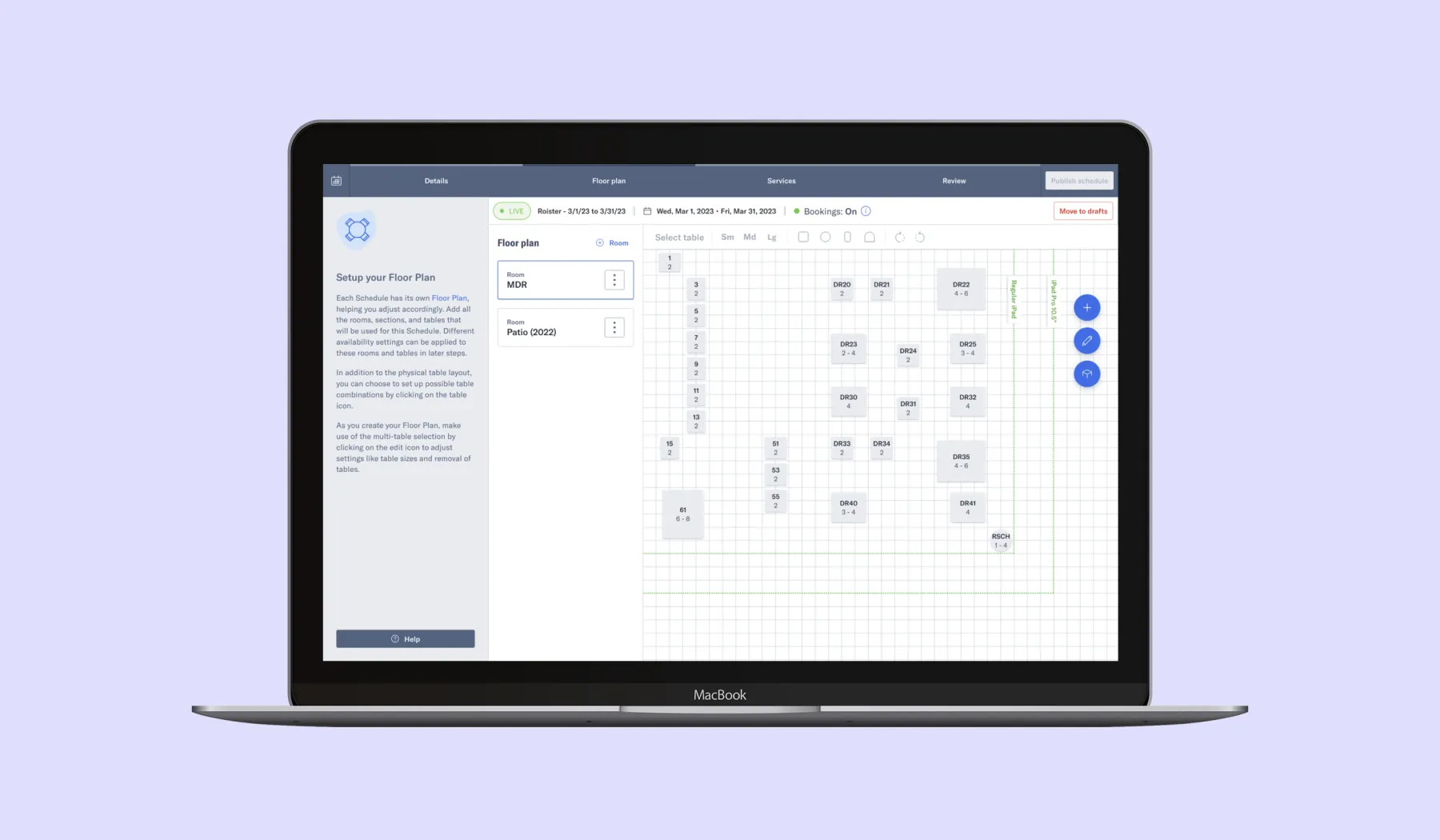
Through comprehensive stakeholder interviews and user research, I identified that restaurant operators were losing time navigating between disconnected tools for reservation management, delivery coordination, takeout scheduling, and event planning. I collaborated with product and engineering teams to map existing workflows and identify opportunities to create unified operational experiences without losing functionality.
Systems Design
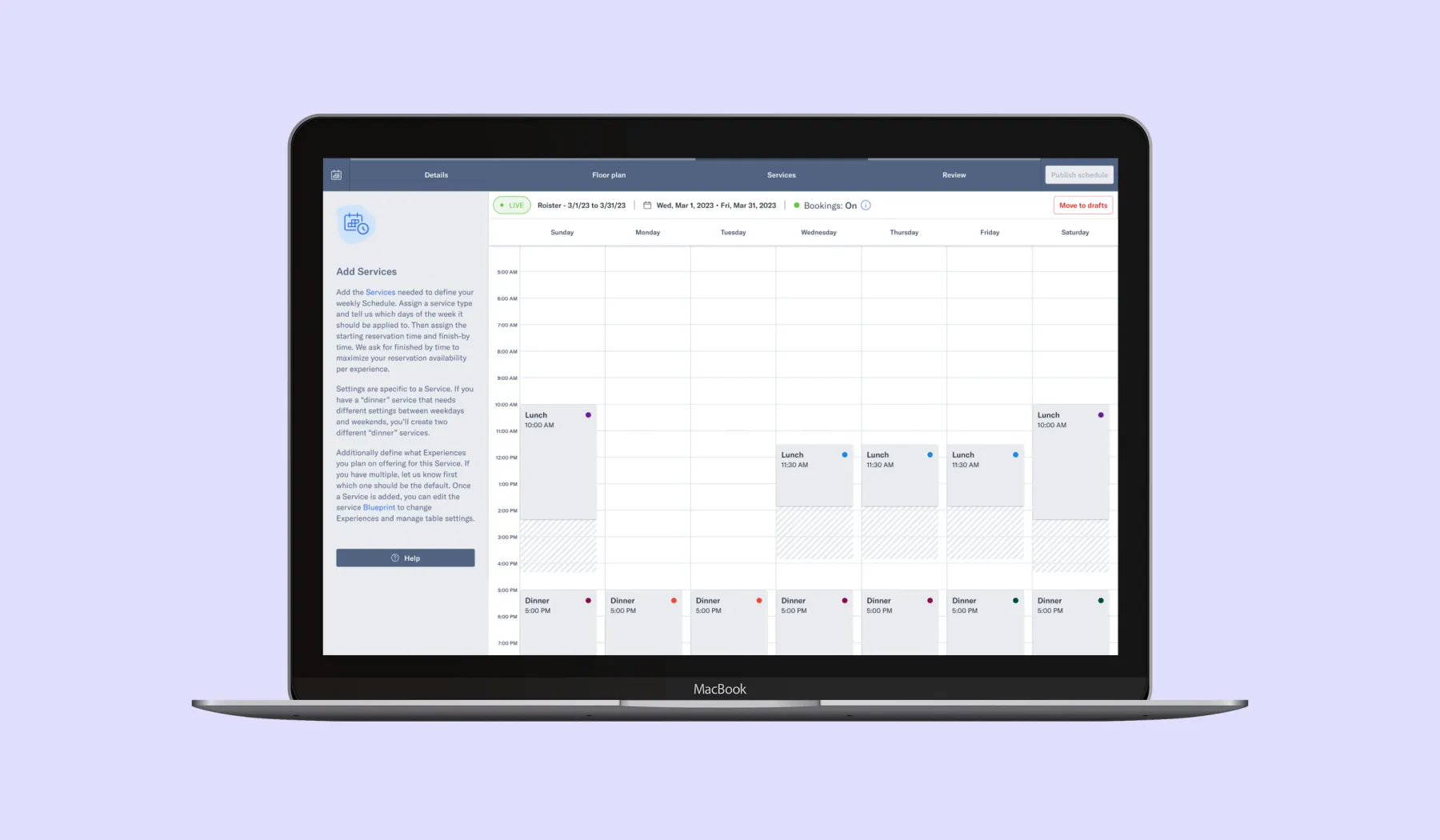
I redesigned the operational architecture to combine reservation, delivery, takeout, and event management in a single, cohesive interface. This required careful information architecture and interaction design to enable real-time updates across floor plans, pacing controls, and availability management while maintaining the flexibility that different restaurant types required for their unique operational needs.
Impact
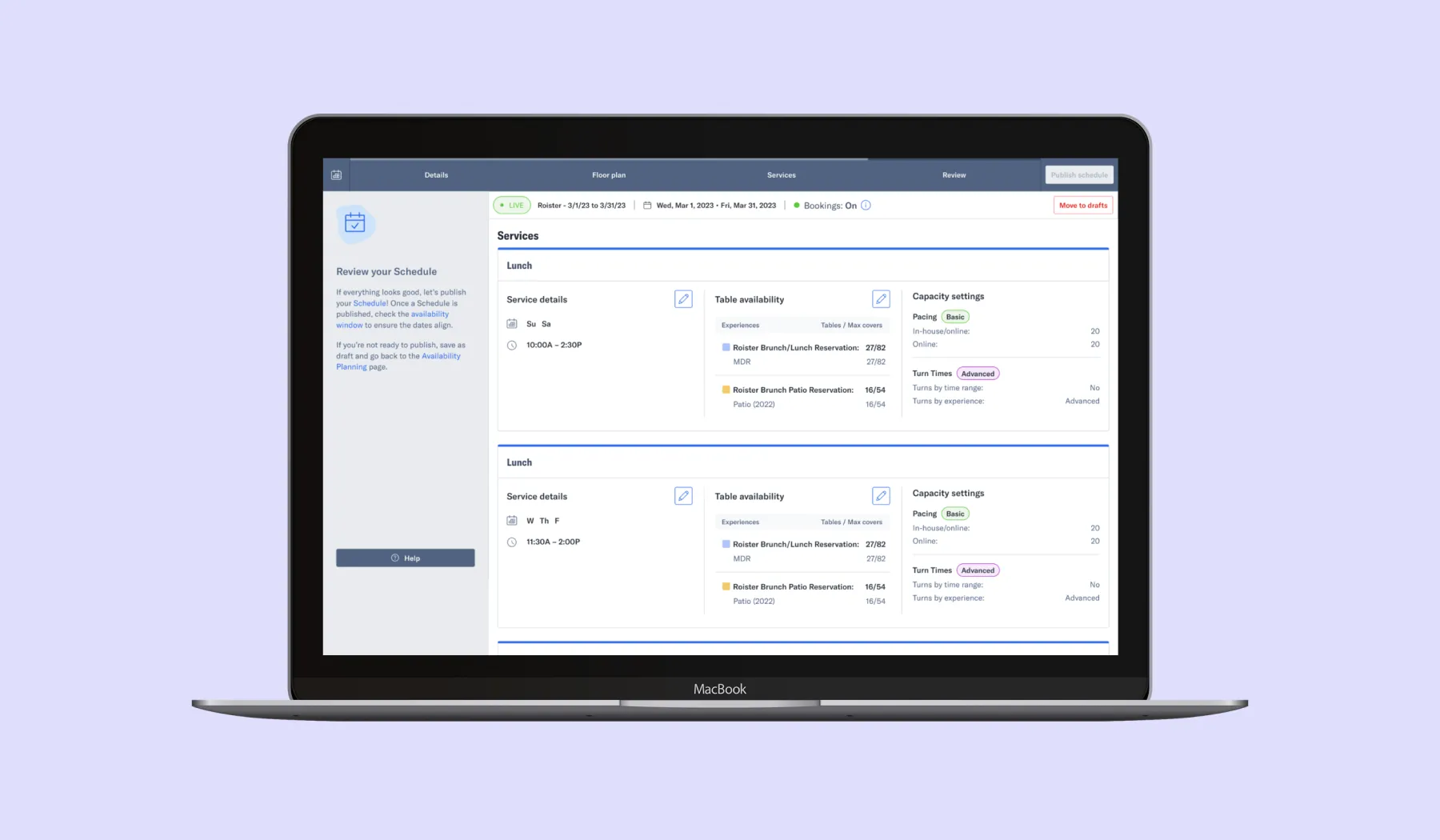
The consolidated approach increased key funnel efficiency, customer conversion, and retention rates while reducing availability mistakes and support requests. Restaurant operators could now manage their entire operation from a unified dashboard, leading to improved customer satisfaction and reduced operational overhead that strengthened customer relationships during a critical growth period.